Showing posts with label small spaces. Show all posts

Apr 29, 2013

Small Spaces

We all love to maximize our small spaces. A tiny room can serve many purposes, with the right layout, scale, the  function of the pieces you use, and a bit of creativity.

For example, a living room does not need a sofa against the wall. Try placing your seating in the center - maybe a chaise or two instead - and use furnishings that do many things.  A desk/dining table will serve a small space for computer work, bill pay and office functions, and for eating and gathering, as a serving and dining table.   Bookshelves can be configured to store as well as display, and even conceal a flat screen TV and audio equipment. 
In small living spaces, raising your furniture up, gives space underneath for storage. 
Bedrooms with bunk systems are great for children who need space for entertaining and homework. For teens, beds on platforms create a second level for sleeping, and a desk, toy storage and even a lounge area can be worked in underneath.  Dividing a small room without a closet with a book/shelf unit can create a headboard, walk-in closet, wall space for art, and niches for books or display.  Raising a mattress onto a platform with drawer storage can eliminate the need for dressers.

Small apartments with single wall kitchens can be transformed with a single unit that includes a tall standing cabinet, a flat surface for a table, and upper cabinets, all joined into a self-standing rectangle. The end result is a divider, cabinets, a table/desk, and a place under the table for seating, the garbage can and the cat bed!  Using wall-to-ceiling cabinets makes a small kitchen space look larger. Adding glass to cabinet doors makes them feel less imposing. 

Aug 15, 2012

Maximize your small kitchen!

You have a small kitchen. What are the design elements that you can use to maximize the space?   Try one of these 5 for a big impact.


1) Light. If you have windows, then don't dress them up!  Keep window coverings simple so there is no blocking of light.  Without windows, you'll need to rely on fixtures. Choose LED under and in-cabinet lighting for clean, white light. Be sure that your fixture globes and shades are clean, light in color, and the bulb wattage is correct. Switching to compact florescent bulbs, which are lower wattage use, often means a brighter light.

2) Color. When there's little difference between the colors of the walls, the counters, the cabinetry, and the woodwork, your eye glides over the surfaces looking for a place to rest, and that movement tricks you into thinking the space is larger than it really is. Light colors are great in a small kitchen. They reflects light, which enhances the sense of space and makes the walls seem to recede. White is the most popular color and is traditional and right for many design styles.

3) Organize. Small kitchens can have storage challenges. Counters often become storage areas, but eliminating clutter can help any space feel larger. Clear off the counters, the windowsill, and the cabinet tops, and stash as much as you can behind closed doors.

4) Use Glass.  Making a small kitchen feel larger is a matter of fooling the eye and tricking the brain into thinking the space is bigger. One way to do that is to remove some cabinet doors or replace the solid fronts with glass.  Adding in-cabinet lighting showcases the depth and also adds a sense of space.

5) Carve Out Storage Space.  Shelves flush with the walls and recessed into space between the studs add storage without consuming valuable space in a small kitchen.  If you don't have space within your kitchen, instead look for a spot near your kitchen, such as a breakfast nook or passageway, to implement recessed shelves.

Jul 31, 2012

Small spaces need smart design.

I lived in a small apartment in NY before moving to California. It's not easy to update a single room - on a budget - without having someone handy to help.  Here are some ideas for space planning and decorating that you can try.


1) Movable "walls".  Do you have a dresser? A headboard? In a single room apartment, they can serve as a room divider. Even your dining table can separate the kitchen from the bedroom - perhaps with a bench seat on one side instead of chairs.  If you have a budget, use folding screens. Second-hand windows, doors and shutters can make a great screen depending upon your style. For the do-it-yourself expert, you can build a divider from shelves, blocking off some of the openings for more privacy. If a wall is more your style, build one that can be removed, inserting tempered glass or plexiglass to keep light moving through. To separate my kitchenette from the rest of the space I had my dad build a tall cabinet then added a top shelf and a table at 28" that attached to the wall. It kept the space open, added great storage and I eliminated needing a full table and chair set. While they are expensive, room dividers that revolve storage and the TV from one side to the other, are a great solution.


2) Let the light in.  Privacy is key in a big city, but small spaces NEED light.  A transparent or open-weave room divider can keep your bedroom or guest sleeping area private from the public space.  Leaving windows un-dressed (no drapes or hard treatments) using window film is another option and easy to install. For simplicity use frosted effect films, or for drama use patterns and textures. Literally add light to cabinets, shelves, moldings and surrounding art and large pieces of furniture:  LED strips and ropes provide light without high energy use!


3) Uniformity is best.  To make small spaces seem larger, unifying the color scheme is best. Monochromatic color schemes in neutral colors will help make walls and floors seem larger. Accent the space with colorful artwork and large scale accessories. If you have many collectibles, group them in one area to keep the space looking open.


4) Store it.  Having a clutter-free space is attractive as well as provides peace of mind.  For that dual-duty kitchen table/desk, find some great wicker or paper boxes with lids and 


5) Open it up.  In apartments with many small rooms or long hallways with rooms off to the sides, removing doors (store under beds if you can) is a solution to keep spaces flowing together.  Are you an owner? Try opening a wall and creating a pass-through or even add glass for a window effect. Here, the wall was partially removed and stained glass insets added for privacy and a fabulous artistic element.

Nov 30, 2011

Ideas for small spaces.


Whether your small space is a bedroom, apartment, or home, here are five ideas to help you maximize the space you have:


One wall of shelves adds storage and opens the floor space.
1) Raise the heights of storage. Keep things off the floor and use taller pieces to make a small room appear larger. For example, a bookcase that spans the entire floor-to-ceiling distance makes a ceiling seem higher. Dedicating one wall to bookshelves that takes advantage of every inch, or using a large armoire or storage piece on only one wall, will make a room look bigger and eliminates the feeling of a cluttered space. Close off a few shelves with doors for neatness.  Stack file cabinets or chests (safety first) on top of one another rather than lining them up along the wall. Left a bed off the floor to add storage drawers, and if the ceiling is high enough, perhaps making a space underneath for a desk, lounge area or reading nook.


Loveseats make a narrow apartment comfy but not crowded


2) Use furniture wisely & make every piece count.  For a small living room use a backless chaise or daybed to divide adjoining space or functional areas; for example, separate the kitchen area from the family room or the living room from the dining room. Downscale your seating and even tables so you have the function you need while retaining an open feel. Try using a storage bench instead of dining or desk chairs to serve a dual purpose. Open backed shelves make great room dividers but look nice from either side. 


White works in this tiny bedroom with stacked storage.


3) Keep it light. While you don't have to use white paint, a lighter color background (floors, walls and even shelving) will help make a small room feel more open. Monochromatic color schemes are great for small spaces since they blur the boundaries between walls and furniture to make a space feel expansive. Don't hide windows, rather make them appear larger by placing window coverings above or to the sides. Position a mirror to capture light and reflect it back into the space.


4) Take it off.  If you can remove doors to rooms that don't need privacy...do.  Opening a small bedroom to a hallway makes the room seem more connected to the other spaces, may add light, and there are many uses for the doors so they don't need to be stored ( a desk top, a panel for an appliance, a new back to a bookshelf).  Hanging a curtain or beads instead provides a more open divider but eliminates door swings and maintains a more open feel.


5) Glass (or other transparent material :)) is your friend. Need a privacy divider but it blocks light? Tempered glass walls and door inserts allow light to pass through rooms but create privacy. New resin and plastic products with embedded designs are also available. Can't do a whole wall? Create a small interior 'window' or even an over-door transom to allow light in.  Glass tabletops help a room feel more open than wooden tops.

Jul 26, 2011

Dishwasher news you will love.

Doing the dishes is a fact of life.  You can make it easier - and stylish - while saving water and energy. New kitchen products are introduced annually, but it seems as though dishwashers are one of the most often upgraded appliances.
Check out the options and features on these new products.


Fisher Paykel has designed a single DishDrawer for small loads. A great solution for a one or two person household and those needing to wash smaller loads - kids baking projects come to mind.   Its height enables large pots, platters, plates, and bowls to be placed effortlessly into the drawer. The independently movable racks fit all sizes of cups and mugs or can be folded away to maximize space. Using less than 2 gallons of water, the DishDrawer is priced reasonably and installs easily.


Kitchen Aid's new version of their sink -dishwasher is Briva. Ideal for small households, a wet bar, or vacation home, it has the capacity for 5 place settings as well as large serving pieces and pots. Its lid pops up when the cycle is complete. The cutting board creates additional preparation space and the steel lid doubles as a place to rest hot pots.


Touted as the "world's most intelligent dishwasher", Miele just released Futura to the market.  With adjustable trays, baskets, and racks, the interior fittings are flexible, and their 3-D cutlery rack solves a host of washing issues. Computerized programs offer up to 16 washing cycles, adjust water temperature, monitor drying and save 35% more water than previous generations. An interior light turns on when loading and the auto open drying feature allows steam out and ambient air in.  Check out the features at http://www.mieleusa.com/. Its sleek styling is hard to resist but the cleaning capacity is awe-inspiring. 

Jul 21, 2011

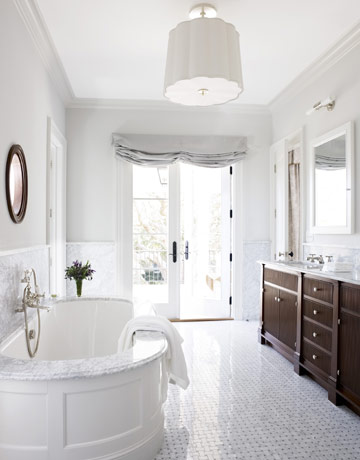
White baths - timeless and classic


Transitional style.
With so many options in stone, porcelain and ceramic tile, we don't often think of the design possibilities using white. Using textures, varying scale, and changing the shades of white in tile and slabs, can create dramatic baths whose designs stand the test of time. Using accent hues in cabinetry, mirrors, and lighting, a white bath will be timeless.  With classic elements, these baths demonstrate how stunning simply white can be.
Classic and traditional.
Cottage casual and minimalist yet comfortable.
Classic and elegant with cabinetry as the accent hue.

Jul 15, 2011

Why use an interior designer?

AFTER
Interior designers add value in many ways than simply through aesthetics. When you make a decision to remodel or update your home, and bring in a designer, it WILL change your life in the best ways. Making an investment in your home should be done wisely.  From a few hours of time spent by a designer, comes a many-year enjoyment of the spaces you change. Rather than struggle through agonizing weeks with plans, surface materials, fabrics, dimensions and "what-if's", using a professional designer will bring timely satisfaction, creativity, and perfection to your project.


BEFORE
I've rescued clients from bad furniture purchases, the "nightmare" they lived through with a bad contractor, the poor selections of  floor coverings and paint colors that they made, and throwing their hands up at a poorly designed kitchen or bath. Don't waste money. Don't waste time. In interior designer knows codes, space-planning, and had the resources and knowledge to recommend everything to finish and furnish your home. With access to new products and creative ideas, your time with a designer will be well-spent.

When want to you love the results, meet your budget, and nail your style, the decision to hire a designer is always right. 


Jul 13, 2011

Tips for making a space seem larger.

We need to live with the spaces we have, whether they are an apartment, a dorm room, or a small home. To make them seem larger and help make them feel less crowded, try one or more of these ideas.


Lighting, glass and color play a part making this two room apartment feel larger.

1) Lighten up.  Yes, light does make spaces seem larger. If you use up-lights under large pieces of furniture or in dark corners, the illusion is that more space exists.  Rather than leaving corners empty, try adding a table and lamp.  Mirrors that reflect natural daylight are a great way to 'add' space as well. Even if you don't have windows, place a lamp in front of a mirror on the darkest, largest wall and see how it brightens and enlarges the space. Using glass table tops, insets with lighted shelves for cabinets,  and even remove doors to rooms to allow light in.


2) Arrange furniture wisely.  A few ideas on this topic work well in small spaces. First is scaling the pieces to work in the space. Don't purchase large, rolled arm sofas when you have a 10' x 10' room. Instead, opt for a loveseat and even armless chairs; you add seating without mass.  Two, floating furniture away from the walls DOES make it seem as though the room is larger. It allows you to walk around and through the furnishings giving a grander apparent space.  Third, angling furniture on short walls - placing pieces together can help like a table backed up to a loveseat - since your eye sees a longer wall dimension, hence, space.


3) Color counts.  If you can keep the largest pieces in the same tone as the walls, they will blend in and make a room feel wider.  Lighter colors do tend to make spaces look larger, although breaking that 'rule' works if other elements - lighting, scale, and accents - help the eye travel around a space. Monochromatic schemes in neutral colors work well, adding back an accent hue to draw attention to points around the room.


4) Raise things up.  Even if your ceilings are only 8' high, there are several tricks to give the illusion of height in a room. Place window coverings above the windows so they seem taller. Use moldings and other architectural elements to raise the eye up - a crown, medallions for hanging fixtures, tall shelves to the ceiling.  Hang light fixtures slightly higher, and do the same with artwork. 


5) Make things function well. Need a desk, a table, some storage? Find or make a piece that performs all three functions and save space.  In dorms and apartments, a work desk usually becomes a dining table, and placed on a wall - possibly perpendicular - allows you to add shelving for books and office 'stuff' and still make the desk feel like a table. When looking for ways to divide a space - say the bed area from the sofa area - use open shelving that can house a TV, lighting, decorative and functional items, and look good doing so. Console tables can make ideal desks, and even dining tables. Backed up to an open backed sofa, creates a great dining area with instant seating. Using benches for seating around tables adds storage for quick access.


Jun 17, 2011

Favorite decor for June

I love to change accessories seasonally, especially when I prepare to use outdoor spaces for eating and entertaining. Here are some great finds for indoors and out to start your summer fun!


1) Lighting. This is a nice departure from traditional metal lanterns. Made of glazed ceramic, these lanterns can be hung, placed on a surface, and strung along the eaves of a covered porch. The light is soft and diffused and looks great against the tabletop or wall. From Pottery Barn.


2) Furniture: This is a great bench from Ballard Designs. It's scaled right for a narrow hallway or the foot of a bed.  In black and ivory, it works with most traditional decor. 


3) Planters: A treat from Horchow, these are incredibly nice and lightweight. Most poly planters are matte and in solid colors. These have a realistic ceramic-looking glaze and are light enough to move the pots around as your plants grow or the sunlight changes.


5) Accessories.  For summer, I love to introduce coral and cream. The seaside motif is a bonus since I think coral reef patterns are timeless classics.  These pillows are from WS Home. The wooden beads on the sand dollar pillow are really nice, and I do use them on a covered patio where there is no direct sunlight. Check out the pillows with a Seaside theme for other colors and patterns you may love.


6) Entertaining:  This is a fun set for any style home.   I'm the hostess that puts the condiments in individual bowls so I never put the remainder back into the bottle. These are brightly colored, look like the right size for a party, and they can be used year-round.


7) Tabletop: From Kim Seybert who is an extraordinary designer of luxury table linens and napkin rings. Since coral (the organism) is indicative of seaside and summer, setting the table with these napkin rings is both seasonal and elegant. Paired with all white dinnerware, you can be flexible with napkins or table runners.  Available in multiple bead colors.

Jun 15, 2011

Part 2 - Ten more ideas for updating your decor.

Last week I posted a list of ten ideas to update your decor, bring in a new element, or just to re-fresh your rooms.  Some are very simple and some for advanced do-it-yourself fans.  Here are ten more ideas to try for every room in your home. 


1) Add flowers.  There is something about a container of flowers that is refreshing.  Using a single type of bloom - whether they are orchids,  carnations or lilies - makes an elegant statement and really dresses up a room. The container you use, from a glass vase to a ceramic urn, will add to creating a new statement in your space.


2) Make a lighting change.
 I always like to add light to rooms to vary how they feel. A simple candlestick lamp on a small table can brighten a dark corner.  One fabulous floor lamp keeps your tables clear but gives new life to your seating group. How about dropping a pendant over one of your tables? It does require wiring - or a swag cord -  but the effect of lifting light and not cluttering your surfaces is wonderful.


3) Create a focal point.  A new wall color in your room can make a bold or subtle statement and add a great element to the space. How about painting the "L" shape in the entry with a rich color that hints of the accessories that you use in the adjoining rooms? This taupe wall - with its floor mirror - is perfect for the clean lines of this living room.


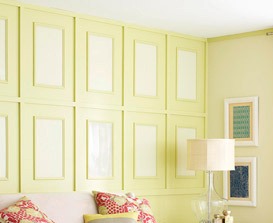
4) Add detail.  Molding is a quick way to dress up doors, walls, windows and ceilings.  From hardware stores and lumberyards,  moldings are as inexpensive as $0.30 per foot. Creating a framework on a large wall, adding a chair rail to a dining room, and emphasizing a great window or fireplace with trim, will add drama and interest. Beef up the moldings you may have for a richer effect.


5) Blend your colors. For a dramatic change, remove multiple colors from your room by taking away bold pillows, accessories and other large items. Keep the colors remaining similar - even in accessories - for a great new look.  Monochromatic doesn't mean white and you can use shades of the same hue. Take a look at the warmth in this entry -living room in hues of orange-gold. 


6) Store it with finesse. Why have a piece of furniture with one use?  Instead of multiple chairs at a table, add a storage bench with a lift-up lid to tuck in the extra large bowls, napkins, and even summer dishware.  In this eating nook, a storage ottoman is also used as seating and as a tabletop with a tray.  


7) Create drama. In neutral rooms, add vibrant color in small doses.  From a piece of art on the wall, a collection of vases on a tabletop, or a great area rug, change a bland room in minutes. Here the neutral taupe and cream of this kitchen is a great backdrop for the lime green stools, accessories and lighting.


8) Re-purpose your pieces. Have a great old chest in your bedroom that you're tired of? Use it in an entry or hallway with new hardware.  With a coat of crackle paint and an apron added to the tub, this  bathroom was turned cottage chic with an old dresser. Even the top was kept and urethaned to protect from splashes.  Turn an old sewing table into a great powder room piece and add a vessel sink.  How about using the drawers from an old dresser as shelves?  You may have 2 pieces you can put together that will serve as the base for a new table or desk.


9) Bring outdoor elements in.  Plants make wonderful room decor and there are many living varieties that require low-light and little watering. Even a grapevine wreath pr a collection of faux topiary could work. I hesitate to recommend some fake plants since they look fake.  This space used plants in several areas, even as a room divider. They are a wonderful color and soft accent for this small space.


10) Create a new display. Using simple glass containers in a bath or kitchen to display necessities is a great look.  Purchase inexpensive glass apothecary jars for the bath and fill them with cotton balls, soaps, and bath salts.  The right cruet looks nice to hold bath gels. In the kitchen, Mason jars and old jam and jelly jars hold flour, salt, oatmeal, rice, etc. 


Jun 13, 2011

Part one - Ten Ideas for updating your decor.

We all like to make changes to our homes and apartments. It grounds us, gives us new perspective, and the changes we make are pleasing. Try a few of these ideas to change your decor.


1) Change your bed. A dramatic change to a bedroom is to add a headboard (see Blog 5/30/11 for ideas) for storage, interest and an architectural element.  It creates a great focal point, can be a place to use a new fabric in the room, and changes the feel of the space.


2) Re-arrange your art. We love to see personal collections but when you group styles and colors together, it creates a dramatic focal point. Have lots of family photos? Keep the colored prints in one area and the black and whites in another. Similar frames work to create continuity; it enables a gallery feel which is elegant yet enjoyable.


3) Add some elegance. When sprucing up a room, adding a bit of elegance can dress up the space and often highlight the style you have. Bring in an orchid plant for a large console or the coffee table. Have a great old bowl? Plant it there, allowing for plenty of drainage with gravel or decorative stones. A great candelabra can dress up a table or counter-top. Try a lace table runner on the kitchen table in a country home or a textured linen for a traditional space.


4) Bring in light. Add a great mirror to an entry, hallway, over a chest or dresser, and swap out a flat glued-to the-wall bath mirror with a framed one. This small change can have a huge impact.


5) Warm up the windows. Have drapes already? Add an organic feel with a natural woven blind. They can be elegant, casual and are wonderful to filter light. Change out your blinds to Roman Shades. It adds fabric, softness and an entirely new look.  Love your blinds? Add a great solid silk panel. Dupioni is not expensive, adds great texture and warms the windows instantly. 


6) Neutralize your fabrics. I love to see variations in prints, scale and colors but to create a real change, try a neutral look. Remove the print pillows and use textured ones in the colors of your sofa fabrics. Swap out colored pillows from your bed for all white. If you cannot tolerate solid colors, try stripes and dots, but keep them all in the same color palette. This bedroom was blue, green and beige and the change to blue was easy and dramatic.


7) Update your bedside. Get rid of the clutter and create an elegant, restful vignette. Store those books and magazines in a lidded wicker or printed paper box. It can tuck under the bed or nightstand for a clean look. Add a small plant - real is best - like an orchid, jade plant or small philodendron that is easy care and attractive. Stash your jewelry and other objects in a small box. 


8) Add some sparkle. In almost any style home, there is a place for some crystal beads, a pair of glimmering silver candlesticks, and even a collection of mercury vases. Try adding crystal votive holders, a collection of sparkling gemstone rocks, and even an assortment of glass jars filled with found objects. 


9) Dress up your coffee table. A great room opener and furniture reviver is to add glass or a mirrored panel to the center. It creates an entirely new look.


10) De-clutter. Rather than having the things you drop onto the kitchen counter, dresser top or entry console on display, collect them in a basket, tray, bowl, or other container that makes them easy to reach and more attractive to behold. Keeping mail and newspapers in a box or basket makes them easy to gather and transport to your office or reading chair, and contains them nicely.