- Keep History in Mind. If you own a home with a definable architectural style like Victorian, Cape Cod, Craftsman, etc., pay attention to colors in that genre. Using a designer helps to identify the period and how to select colors to treat each element on the house. At Touch of Tradition, we specialize in period color selections so don't hesitate to contact us with questions.
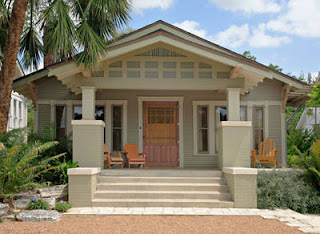
Sea Pine & Antique White - Trim Horizon Gray - Body of houseAutumn Brown - Accent Trim Benjamin Moore
2. Consider the neighbors. What works in your neighborhood? Think of your neighborhood as fabric, and your house as one thread in that fabric. Will the colors you are leaning towards fit with the overall feel of the neighborhood? Can you be unique without being an eyesore?
3. Structural Harmony with Rest of the House Consider your house's whole. What color is your roof? Is it slate, aluminum, copper, cedar shakes? You don't need to match your paint to your shingles but all colors should fit together. Consider the landscaping and natural elements around the house to suggest color families that will guide your exterior paint choices.
4. The Inside Affects the Outside Don't be afraid to pull the colors for your home from an inspiration piece or those colors used inside your home. It adds a sense of harmony and integrity in design. When you enter the home, the exterior serves to guide you as to the style and the feel.
 5. White is The Color of Tradition White is classic and traditional with stately appeal. With the right complementary touches--eaves, window casing, door trim, etc.--white can be a fantastic exterior paint color option. Here, this contemporary interpretation of a Mission style home is set off from the greenery and expansive skyline with an all-white stucco finish.
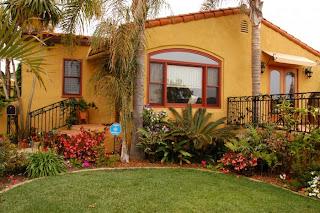
6. Details Should be Darker. Darker colors are great for drawing the eye to architectural details you don't want to be missed. If you have an archway or trim, or any particular feature you want highlighted, draw attention with darker colors. They're a great choice for recessed panels. If you have features that protrude from the wall surface, highlight those with lighter colors as they will stand out more against the darker shade. The bold colors in the stucco below, required deep trim and door colors to have their details stand out.
7. Consider the Number of Colors On some style homes you will see as many as 8-10 different colors but requires the keen eye of a professional designer to make this work. The number of colors used depends on the simplicity or complexity of your home and the scale, architecture and elements. Adding too many colors to a home can make the home look garish. Look for homes with similar architecture and see what others have successfully done.8. Take Advantage of Color Tools Pick up a color wheel or fan deck. Most paint stores have samples that you can bring home to make decisions. Most professional shops have pint-size samplers available that you can take home and test on your exterior. Exterior paint colors do look different in person than they do printed on samples and the paint will take on a different hue depending upon the time of day.
Showing posts with label texture. Show all posts
Showing posts with label texture. Show all posts
Aug 20, 2012
How to select exterior paint colors.


Jan 9, 2012
Pillow inspiration!
Pillows are a wonderful accessory for most rooms. They provide color, texture,and style. Try swapping the color, texture and location of pillows throughout the year for interest! If your color scheme is cohesive, bedrooms the same color as the living areas, move pillows from room to room so you achieve a different look easily. Don't forget that you can also change pillows seasonally! Here are some ideas for how to use them and some options for size and shape.
 |
| Pretty but a bit crowded for sitting - depends upon your use! |
 |
| Appliques and contrast trim create interest. |
2) DO consider changing the shape and color of the pillows from that of a base sofa cushion and fabric color. Coordinate rather than match fabrics so they serve as an accessory. For those that come with your pre-made sofa, change them up. Add another fabric to the face of some and add welting, trim and other details for interest.
3) The right sized square pillow works for many applications. For example, 16" squares are good corner pillows for 6-7' sofas and 18" squares work for 8' or larger sofas. 26" x 26" is a good size for floor pillows and back pillows for queen and king sized beds. For softness and the ability to re-shape, use a down or man-made down fill.
 |
| Neckroll pillows are a great shape. |
 |
| Kidney pillows are useful. |
5) A well -placed kidney pillow can dress up a large dining or lounge chair and help make a deep seat more comfortable. The pillow should fit just inside the width of the seat and be as high as needed for comfort when sitting against the back of the furniture.
6) Add detail with contrast welting, a second fabric, and appliques. How about corner or center buttons? One decorative pillow has more impact than 3 plain ones.

7) Knife-edge pillows are fine but try adding flanges and welting for interest. If you can sew, try mixing fabrics on front and back, apply a center strip, or even create an envelope style. When pillows serve as a decorative accessory, the added details are what make them work!

Subscribe to:
Posts (Atom)