Showing posts with label plants in decor. Show all posts

Nov 15, 2017

Plants To Reduce Toxicity In Your Home

On average, we spend 90% of our time indoors in schools, offices, or at home. If you're not reading labels on items like furniture, accessories, fabrics, pet toys, carpeting and cleaning supplies, (the list is significantly more extensive) then you may be exposing you and your family to toxic chemicals that constantly offgas into your indoor air. The U.S. Environmental Protection Agency ranks indoor air quality as one of the top five environmental risks to public health. Some brief examples:
Furniture is frequently made with materials and adhesives (glue) including MDF (Medium density fiberboard), press board, and other wood products imported from Asia that contain formalin, formaldehyde, and toxic finishes. Accessories made in China are frequently painted with colorants that are toxic to hold as well as inhale. Watch out for lead in paints, wire baskets, string lights, 'decorative use only' ceramics and vases etc... Fabrics are often sprayed with flame retardants, nanoparticles that help with stain resistance, and even fabric protectors that are toxic. Ever wonder how they got the glowing green ball you throw to your dog?  If it's made in China, beware of the chemicals in the colorant and the plastic and don't allow your dog to chew and swallow any part of it. I recommend eco-friendly, non-toxic toys made in the US. The European Union has banned toxic pet toys.The backing and adhesives in carpeting have come a long way, but you need to read the label on what you are purchasing. Even gym and tumbling mats have substances that off-gas, and again, have been studied and banned in Europe.Air fresheners are the worst products you can use. They often contain phthalate and even insecticides. Take a look at what the NRDC says. Household cleaners are a waste land of chemicals that include petroleum distillates, chlorine, insecticide, formaldehyde, thiourea, and so many more. If the label says AVOID contact with skin, and use in a well ventilated area, don't use it to clean your home.  DIY cleaners are safe and effective.
So. other than banning these items - especially in environments with children, older adults and pets  - what can you do?  Buy plants.  Here  are the top 3 easy care plants that you can use in your home and office, to  help purify the air.

1. Areca Palm : While you’re spending time in your room, this plant is hard at work doing its best oxygen delivery in the daytime. For optimal air cleaning you should have one 4' high plant per room.
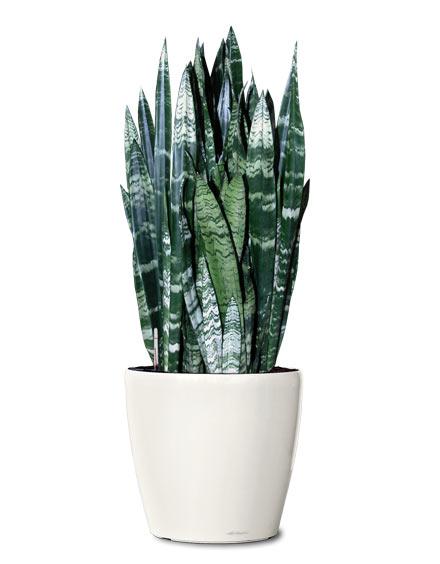
2.  Mother-in-Law's Tongue or snake plant: Great for a bedroom since it works best delivering oxygen in the evening. Grab 6-8 plants per person.

3. Peace Lilly: Filters formaldehyde, benzene, toluene and a host of other volatile organic compounds (VOC).

As you head out to the plant nursery, consider that NASA studies recommend that you use one 6-8 inch diameter plant for every 100 square feet of your home.  Also check the plants you select for toxicity to dogs and cats via the American Society for the Prevention of Cruelty to Animals so your furry friends don’t find a dangerous salad to snack on.

Finish with a planter that suits your style! Baskets, tin buckets, ceramic and metal are available for every style.


Jan 30, 2015

Orchids in interiors

Orchids are beautiful, architectural plants that I love to use in interiors. They are easy to care for and readily available. You don't need a greenhouse or a green thumb. You can find them at stores like Home Depot, Trader Joe's, and even Costco.   While there are about 30,000 different species, I have found that the three most popular and readily available orchids are cymbidium, Phalenopsis, and dendrobium. 


Over the years, I have found that there are three main things that keep orchids growing a long time, and make them easy to care for:

One. Do not over water. Orchids do not like "wet feet".  I water mine with a narrow bottle – I actually use plastic seltzer bottles – and use about 1 cup of water no more than twice a month for a 6 inch plant. The bottle allows me to so control where the water goes and I tend to have less water running down the leaves and onto my furniture that way. One time I use liquid fertilizer and once without. It's good to use clear water periodically to rinse the roots of extra salts. I allow the roots to drain thoroughly whether I remove them from the decorative cachepots - and replace them when the soil has dripped dry - or even if you leave them in the single ceramic pot or basket.  Sometimes, I make it easy by propping the original container up in a larger one, and then filling in with polished stones or Moss.  If your house is particularly dry, you can lightly mist your orchids in the morning, but be sure the leaves dry by nightfall. Too much water will cause your orchid to rot.


Two. Give them the right light. Mine thrive in my south facing windows, and the blooms last for a very long time, and then rebloom about once a year.  Generally, they also like good air circulation, so in the summer I open my windows in the plants do better. I turn my orchids every couple of weeks, so that the plant gets even light all around.


Three. Use the right potting soil. Orchid roots need room to grow and like air circulation. If you get an orchid in a sphagnum Moss mix – which is good –  loosen it up before you plant them in your container.  Orchid mix can be purchased at any nursery or big hardware store, and is only about five dollars. You can make your own with Moss, Perlite, and bark, but be sure the soil is loosely packed and changed if it gets too wet. Generally, orchids come in little plastic pots with slits in the side. That's great for about a year. You can buy ceramic orchid pots that already have openings in the side to aerate the roots, or select any pops, container, or basket of your choice.  I do repot about every other year. It seems that the soil needs a bit of refreshing and the size of the pot needs to increase so the roots can grow and the plant can thrive. The best time to replant, and only increase the size about 2 inches, is when the Bloom has died. 


I love putting orchids in cachepots and containers and using them in the bath, on my dining table, and in my living room on end tables. I tend to swap orchids from place to place so they get different light throughout the year.  While they do better outdoors, I use Cymbidium indoors from April through September and then put them out in the garden in spring and summer. They seem to grow well in the east facing raised planter, and then I separate some of the plant and bring them back indoors from September to February. I have some beautiful oval and round pots so use them on my dining table and in my bedroom as a beautiful winter display.  I often mix orchids in the same container, and then swap the wooden bamboo stake that comes with the orchid for a twig or branch. I don't really love the plastic clips that usually come with them, so sometimes I tie the orchid Bloom to the branch with raffia.  Lately, Trader Joe's has been providing plants with a very minimal green wire that works well to hold multiple blooms in one pot.